
Dear You,
Around week nine, I ordered a glass of wine at a dinner I’d been looking forward to, took two sips, and realized I didn’t want it. Not in a virtuous way. In the way you don’t want a second helping of something that’s fine. The glass sat there for two hours, slowly going warm, like a houseguest who didn’t get the hint.
The appetite got quiet. Life got loud. And part of the loud was discovering how many of my social scripts assumed there was a drink in my hand.
What actually changed
I’m not going to pretend to know the mechanism. Plenty of people on these medications describe a reduced interest in alcohol, plenty don’t, and your prescriber is the one to ask about how alcohol and your medication get along, especially because the stomach side of things can get complicated. This is just what happened to me.
The first glass still tasted fine. The second glass lost its appeal entirely, which was new. The pleasant blur I used to drink toward never arrived; instead I’d get a headache around sip four and a vague sense that I’d rather have a glass of water and a nap. Beer became an exercise in fullness with no payoff. Cocktails tasted mostly like sugar, which I suppose they always were.
I didn’t quit. I just stopped wanting more than a little, and then, over months, mostly stopped wanting any.
The scripts I didn’t know I had
Here is where it got awkward. A lot of adult socializing turns out to be built on a shared drink, and I had no idea how many lines I’d been reading off that card.
“Let’s grab a drink” was how I caught up with friends. Now the drink was optional and the catching up felt oddly exposed, like meeting for coffee on a first date instead of dinner. Fine, actually, once I got used to it.
The wedding toast. The work happy hour where the relaxed version of everyone shows up after glass two. The host handing you something at the door before you’ve taken your coat off. The “come on, one more” at 10:40 pm from someone who loves you and wants the night to keep going.
None of these were about alcohol, really. They were about belonging, and the drink was the ticket.
What I order now
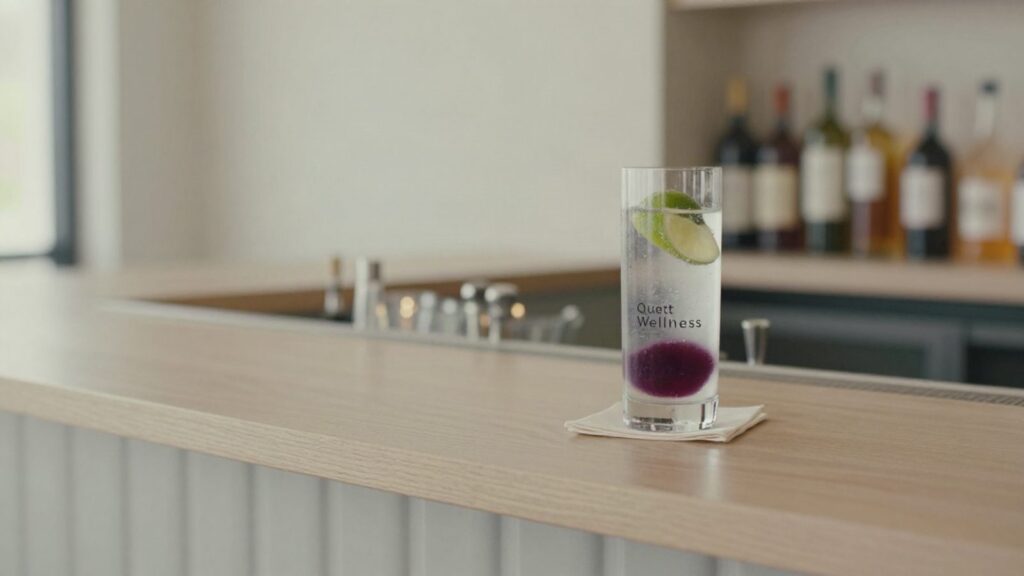
- At a bar: a club soda with a lot of lime and a short straw. It looks like a drink, which spares me the conversation when I don’t feel like having it.
- At dinner: one glass of something good, if I want it, and I let it be one. If I don’t finish it, nobody has ever noticed. People are far less interested in your glass than you think.
- At a party: I hold something. Anything. A sparkling water, a ginger beer, a cup of tea if it’s that kind of party. A hand with a glass in it is a hand that doesn’t get offered a refill.
- At the work thing: I arrive at the start, when people are still sober enough to have real conversations, and I leave at the point where the evening turns into volume. I used to think leaving early was a failure. It’s just a different exit.
“Come on, one more”
I’ve tried several versions. “I’m driving” works but is a lie half the time. “I’m good, thanks” with a smile and no further explanation works better than I expected. Most people aren’t actually invested; they’re being hospitable, and a cheerful no gives them permission to stop.
The friends who pushed harder than that got a plain answer: “Honestly, it doesn’t do much for me anymore. I’d rather stay and talk.” Every single one of them said some version of “oh, okay,” and then we talked. Nobody has ever asked me to leave a party for not drinking. The fear was much bigger than the room.
The mornings
This is the part nobody told me about and the part I’d most like to tell you. Saturday mornings came back. I wake up at 7 with a clear head, make coffee, and have the whole day in front of me instead of the half of it that used to be left after the fog cleared. I didn’t lose a vice. I found a morning. On balance, I’ll take the morning.
Want to tell me something? Reply to any Low Volume email, or write to me here. I read everything.
Getting Quiet shares lived experience, general education, and practical tools. For medical decisions and individual treatment questions, talk with your qualified care team.
 Ayden, founder of Getting Quiet. Read the story →
More on Life around a table
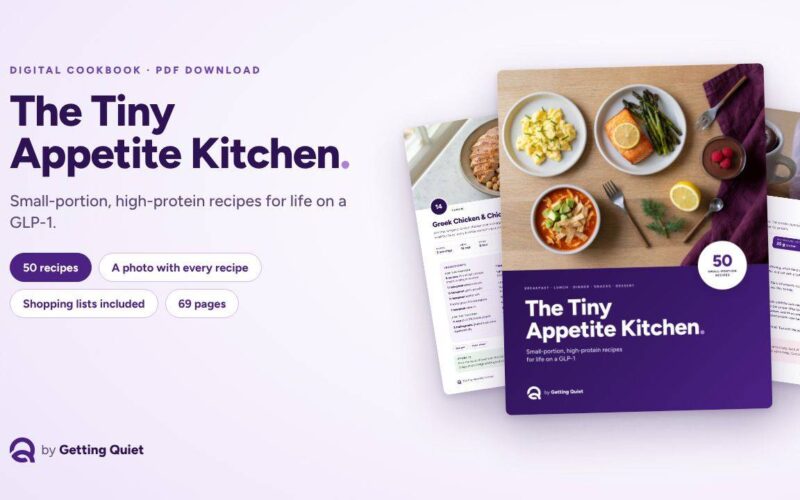
The Tiny Appetite Kitchen is here.
Fifty small-portion, high-protein recipes for the appetite you actually have. The cookbook I needed at week six is out today.
The holiday table, in advance
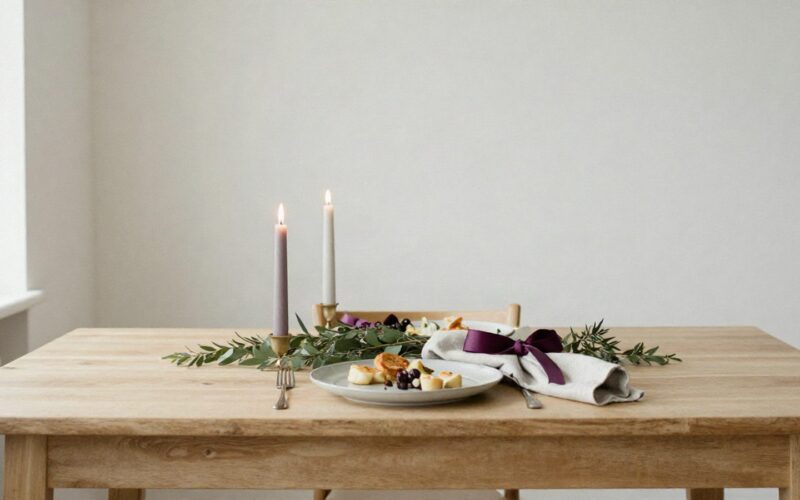
A food holiday on a quiet appetite, planned ahead: eat something small first, bring the protein, take the small plate, and have one sentence ready for the relative.
Hosting dinner when you can’t eat much of it
Why I still host with a tiny appetite. The three-part menu that works for every eater, the host's small plate, and the useful trick of being busy in the kitchen.