Dear You,
Somewhere around month five I noticed my arms had changed, and not in the way I’d hoped. They were smaller, sure. But they were also softer, in a way that had nothing to do with fat. I’d been eating like a bird for five months and my body had, reasonably, started dismantling things it wasn’t using.
I don’t say this to scare anyone. I say it because nobody mentioned it to me at the pharmacy counter, and I wish they had.
What I asked my prescriber
At my next appointment I asked one question: “When I’m eating this little, what am I actually losing?” Not a trick question. I wanted to know what she thought was happening inside me.
She was candid. Eating a lot less means your body looks for fuel, and it doesn’t only burn the stuff you’d like it to burn. Some of what goes is muscle, unless you give it a reason to stay. Two reasons, she said: use it, and feed it. Then she said the thing I’ve repeated to everyone since. “The medication handles the appetite. The muscle is your job.”
Everything past that sentence, the specifics of what and how much, I’m leaving between you and your own care team. Bodies differ, and so do medications and plans. But the question itself is a good one, and you’re allowed to ask it.
Starting embarrassingly small
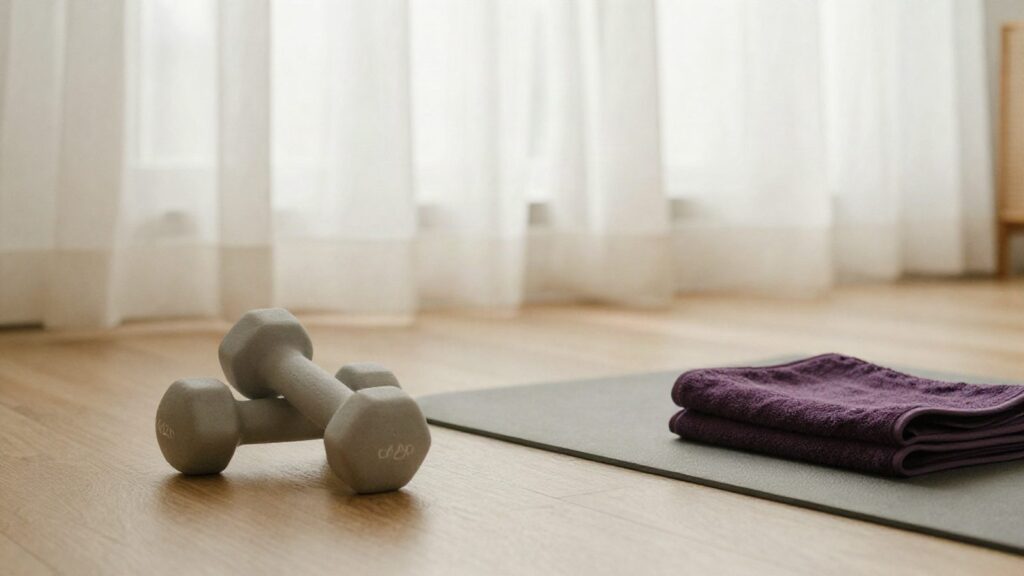
I did not join a gym that week. I bought two dumbbells I could lift comfortably and put them next to the sofa, where I’d trip over them. That was the strategy. Trip, lift, sit down.
Three movements, in the living room, after the coffee and before the shower. Squats holding one weight at my chest. Rows, one arm at a time, with my other hand on the back of a chair. A press over my head. Ten of each, then again. Fifteen minutes on a good day. Eight on a bad one.
The point wasn’t the workout. The point was teaching my body that these muscles were still in use, so it would stop sending them to the recycling bin. A body that picks heavy things up a few times a week gets the memo.
After two months I added a resistance band and a pushup against the kitchen counter. After four I walked into an actual gym, which is its own story for another day. The living room phase was the one that mattered. It’s where the habit set.
Protein first, every time
Here’s the eating half, and I’m going to keep it number-free on purpose.
On a quiet appetite you get maybe a few bites before “full” shows up and shuts the door. If those bites are bread, the bread wins and the protein never makes it in. So protein goes first on the plate and first in the mouth. Eggs before toast. Chicken before rice. The yogurt before the fruit on top of it.
At restaurants I order the protein and treat the sides as garnish. At home the second shelf of the fridge is the protein shelf: hard-boiled eggs, cottage cheese, sliced turkey, leftover salmon. When I open the door with no plan, that shelf is at eye level, and that’s not an accident.
It’s not a diet. There’s no target. It’s an order of operations.
Why it’s non-negotiable now
Two years into maintenance, the strength work is the thing I’d give up last. Not for the way it looks. Because of what happened when I stopped for six weeks after a bad cold: I got tired carrying groceries up the stairs, and that scared me more than any number ever did.
The appetite being quiet is the medication’s gift. Keeping the muscle is how I say thank you for it.
Want to tell me something? Reply to any Low Volume email, or write to me here. I read everything.
Getting Quiet shares lived experience, general education, and practical tools. For medical decisions and individual treatment questions, talk with your qualified care team.
 Ayden, founder of Getting Quiet. Read the story →
More on After goal weight
What I track now (and what I stopped tracking)
The spreadsheet era is over. What I pay attention to in maintenance: energy, strength, the reference jeans, five minutes on Sunday. And why I still weigh in, just less.
The long-term conversation with my care team
Nobody told me what happens after it works. The seven questions I brought to my prescriber, how the talk went, and why I won't tell you what to decide.

Nobody claps for maintenance
The attention stops when the visible change stops. On the loneliness of month fourteen, finding two people who get it, and marking progress nobody else can see.