
The Quiet Part Life around a table
Travel with a small appetite, from the airport to the family table

Dear You,
I used to pack for trips like a person who expected to be hungry. Snacks for the plane, snacks for the room, a mental list of restaurants near the hotel. Then the appetite shrank to the size of a polite houseguest, and I kept packing like the old me, and I kept bringing most of it home. Here is what I do now. One person’s system, tested on airports, hotel rooms and a three-day stay with people who show love in casserole form.
The bag
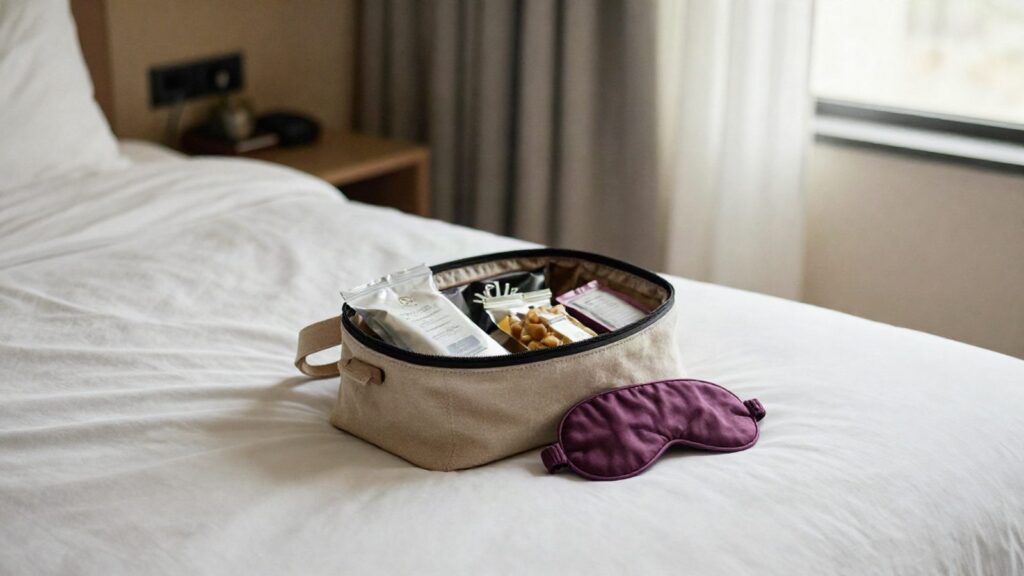
Pack what actually gets eaten, not what seems responsible. For me that is a few single-serve protein things that don’t need a fridge, a small bag of salted nuts, and crackers boring enough to eat when nothing sounds good. That is the whole list. The elaborate snack kit I used to assemble was mostly a tax on my carry-on.
One quiet rule: the medication rides in the carry-on, never the checked bag, with the pharmacy label on it and a small cold pack if your version needs one. Anything about storing or timing it across time zones is a question for your prescriber or pharmacist. I asked mine before my first long flight. It took four minutes.
The airport
Nothing sounds good at an airport even with a full appetite. With a small one, the terminal becomes a hall of mirrors where everything is a pretzel the size of a steering wheel.
What works for me: eat a little something at home before leaving, while it’s still my kitchen and my portions. Then at the gate I look for the smallest protein I can find. A yogurt. A cheese stick from the newsstand cooler. Half of a turkey sandwich, the other half wrapped in a napkin for later or for never. I stopped buying the full meal to have it just in case. Just in case rarely arrived, and the sandwich rode along to the destination like a sad souvenir.
Water, though. Lots of it. Planes are dry, and for some of us the quiet appetite also quiets the thirst signal. I fill the bottle after security and again before boarding.
The hotel
The first thing I do in a hotel room, before I check the view, is open the mini fridge and see if there is room. Then I walk to the nearest store and buy three things: a few yogurts, something with eggs already cooked in it if they have it, and fruit I can eat with one hand. That is breakfast handled for the trip, standing at the window, no buffet, no decision at 7 a.m. about whether I’m hungry yet.
Room service and hotel restaurants love a big plate. I order an appetizer as my dinner and ask for it when the others get their mains. Nobody has ever cared. The server has seen stranger things.
The family table
This is the hard one, so it gets the most words.
My people cook when they’re happy and cook harder when they’re worried. Showing up with a smaller appetite reads, to them, as a review. It isn’t one, but I had to say so out loud. The first night, before anyone served anything, I said: “I’m eating smaller these days. It’s going well, and I’m going to take a little of everything you made. If I don’t finish, that is about me, not the food.” Then I actually took a little of everything. The gesture matters more than the amount.
Three more things that helped over three days:
- I served myself whenever I could. A plate handed to me is a plate I now have to apologize for.
- I kept my own small stash in my bag for the mornings, because the household’s breakfast was a production and my appetite wasn’t awake yet.
- I asked for leftovers to take home. It told them the food was good, which it was, and it moved the eating to a day when I had room for it.
When someone pushed a second helping, I said “I’m good, but I’ll take some for later,” and let that be the end of it. Repeated calmly, it works. Not because it’s clever, but because people run out of steam faster than you’d think when you don’t argue.
Travel used to be a food event with some scenery attached. Now it’s the other way around. I come home with photos instead of a bag of uneaten snacks, and that, honestly, is the better souvenir.

Want to tell me something? Reply to any Low Volume email, or write to me here. I read everything.
Getting Quiet shares lived experience, general education, and practical tools. For medical decisions and individual treatment questions, talk with your qualified care team.
Ayden, founder of Getting Quiet. Read the story →
More on Life around a table
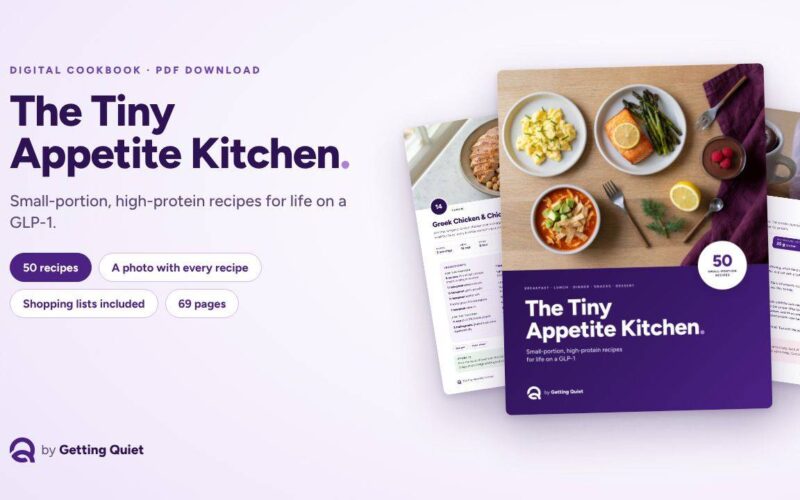
The Tiny Appetite Kitchen is here.
Fifty small-portion, high-protein recipes for the appetite you actually have. The cookbook I needed at week six is out today.

The holiday table, in advance
A food holiday on a quiet appetite, planned ahead: eat something small first, bring the protein, take the small plate, and have one sentence ready for the relative.

Hosting dinner when you can’t eat much of it
Why I still host with a tiny appetite. The three-part menu that works for every eater, the host's small plate, and the useful trick of being busy in the kitchen.