Dear You,
About four months in, on a Wednesday evening, I was sitting on the couch at 7 pm with nothing to do and a feeling I couldn’t name. I wasn’t hungry. I wasn’t tired. I wasn’t sad in any way I could point to. There was just a blankness, a stretch of evening with nothing in it, like a room where a piece of furniture used to be and you keep walking around the spot.
It took me a shamefully long time to figure out what was missing. It was dinner. Not the food. The whole production of it.
Here’s what I didn’t know about myself until it went quiet: food was my hobby. Not in the way people say “I’m a foodie.” In the way that it structured my week. Tuesday I’d be thinking about Friday’s reservation. Thursday I’d be planning Sunday’s cooking. The grocery store was a destination, not an errand. A new restaurant opening was news. A bad day had a solution and it came in a takeout bag. A good day had a reward and it came on a plate.
I didn’t experience any of that as a hobby. I experienced it as being alive. But count the hours and it was a serious hobby, with the time commitment of a sport, and I’d been doing it for thirty years.
Then the medication turned the volume down, and the hobby just stopped. Not the eating. The wanting. The looking forward to. The planning. All of it went quiet at once, and I was left on the couch at 7 pm with a free evening I hadn’t asked for and didn’t know how to spend.
I want to be careful here, because the relief was real too. Enormous, actually. Not thinking about food every forty minutes is a kind of peace I hadn’t known since I was a child. I would not trade it back. But I’d been so braced for the hard parts being physical that I missed the one that turned out to be about meaning. I’d lost a thing I loved, I’d lost it on purpose, and I still got to be sad about it. Both were true, and I spent a few weeks trying to pick one before I accepted that I didn’t have to.
What I did about it was slow and unglamorous.
First I named it. I wrote “I think I’m grieving food” in my notes and felt ridiculous and then felt better. A vague Wednesday blankness became a specific thing I could do something about.
Then I looked at what food had actually been giving me, because it wasn’t the calories. Anticipation: something on the calendar to look forward to. Comfort: a reliable fix for a bad day. Celebration: how good things got marked. Planning: a project with a beginning, an end, and a result I could taste. And company, because almost everything I did with people happened around a table. Each needed its own replacement.
Anticipation got a standing Thursday thing with a friend that isn’t dinner. We walk. Sometimes we get a coffee after. The point is that it’s on the calendar and I look forward to it.
Comfort was the hardest. A bad day used to end with a bag of food, and now the bag doesn’t work, physically or emotionally. What’s filled the slot, honestly, is a very hot shower and an early bedtime. Less fun to say, more effective than I expected.
Celebration moved to things I can keep. A good week gets a small object now: a book, a plant, a candle I’ll actually burn. Something that lasts past the evening.
Planning went back into cooking, just a different kind. I still cook on Sundays, with real attention, in a very small pot. The project is still there. The portion is smaller. I get to taste the result, and the result is a week of lunches instead of one big dinner.
And company stayed at the table. I still go to dinner with people. I just eat a quarter of what they do, and I’m there for them, not for the plate. That shift, from food as the event to food as the excuse for the event, might be the single best thing the medication did for me, and it took losing the hobby to see it.
One person’s grief. Yours might be for something else entirely, or you might feel nothing but the relief, and that’s fine too. But if you’ve found yourself on a couch at 7 pm with a free evening and a blank spot where something used to be, you’re not broken and you’re not ungrateful. You’re a person who lost a hobby, and the first step is admitting you had one.
Want to tell me something? Reply to any Low Volume email, or write to me here. I read everything.
Getting Quiet shares lived experience, general education, and practical tools. For medical decisions and individual treatment questions, talk with your qualified care team.
 Ayden, founder of Getting Quiet. Read the story →
More on When food goes fuzzy
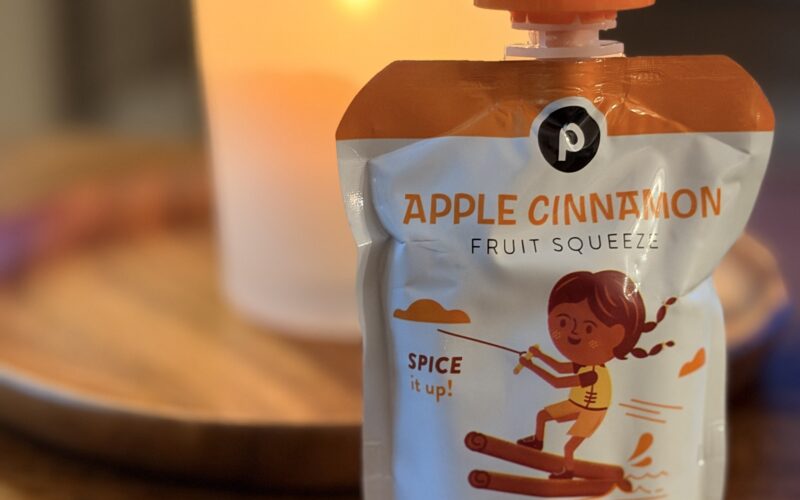
My secret weapon for nausea is a toddler snack, and I’m not sorry
I’ve been lucky with nausea on a GLP-1. When it does show up, the thing that gets me through costs about a dollar and has a cartoon on it. Plus what actually helps, and when to call your care team instead.
What helped in nausea week, and what didn’t
Nine days when food was a theory and the coffee maker was my enemy. Cold things, small sips, saucers, and the phone call that mattered more than any of it.
Eating in front of other people when you’re not hungry
The office pizza, the dinner party, the mother who made your favorite. How to be at the table with a quiet appetite without turning your plate into a performance.