
Dear You,
For about a year after the appetite went quiet, I didn’t have dessert. Not because I’d sworn it off. Because dessert, as the world serves it, had become structurally impossible.
A restaurant slice of cake is the size of a paperback. A pint of ice cream is a commitment. Even the “mini” cheesecakes at the grocery store are built for an appetite I no longer had. I’d order something, eat three forkfuls, feel full in the specific uncomfortable way the medication makes you feel full, and watch the rest sit there going stale while I paid for it. After enough of those, you stop ordering. And then one evening you realize you haven’t tasted chocolate in four months and you’re a little sad about it.
This is one person’s experience, but I think the problem isn’t dessert. The problem is the container.
The small-cup method
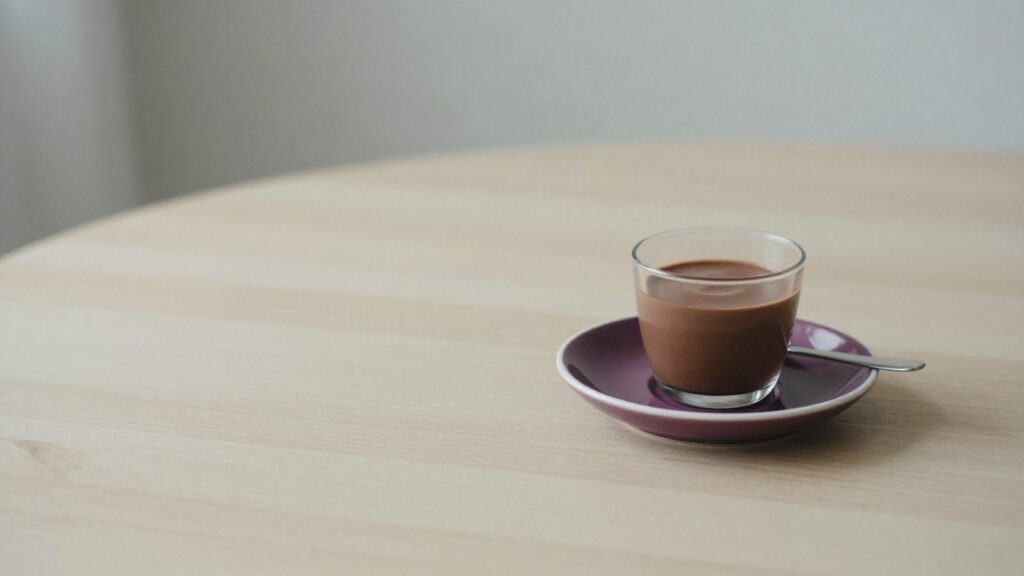
I own six little cups. The kind meant for espresso, or dipping sauce, or the ramekins a recipe tells you to buy and you never do. They hold maybe a quarter of what a normal dessert dish holds. That’s the whole trick.
Whatever the dessert is, it goes in the small cup, and the small cup is the serving. Not “I’ll have a little.” A defined, finished, visible portion that looks complete rather than like a sad corner of something bigger. Your brain reads a full small cup as a full dessert. It reads a quarter-full bowl as deprivation. Same amount of food.
Things that live happily in a small cup:
- Two squares of dark chocolate, broken up, with a few raspberries.
- A spoonful of peanut butter with a crumble of granola on top.
- Warm frozen cherries with a dot of whipped cream.
- Half a brownie, cubed, so it looks like more than it is.
- The mousse I’m about to tell you about.
The cottage cheese conversion
I need you to stay with me here. I was a cottage cheese skeptic. It looked like something that happened to milk by accident.
Then a friend who’d been on the medication longer than I had served me a chocolate mousse at her place, in a small cup, and after I’d finished it she told me what it was. Cottage cheese, blended smooth with cocoa, a little maple syrup, a pinch of salt, and chilled for an hour. That was it. The texture was dense and cold and real. The protein kept it from being the kind of sweet thing that leaves you hungry twenty minutes later, which matters when your dinner was already small.
I went home and made a batch in a blender at 9 pm like a man possessed. It filled four small cups. That was dessert for four nights, or for two people for two nights, which brings me to the last part.
Sharing is the default now
At restaurants I order one dessert for the table and ask for extra spoons. I don’t announce it. I don’t explain the medication. “Let’s share this” is a normal sentence that normal people say. The server brings spoons, everybody takes a bite or three, and the plate gets finished by whoever has room. I get the taste I wanted. Nothing goes stale on my watch.
At home, if my partner wants something sweet, we split a single portion into two small cups. Some nights I finish mine. Some nights it’s two bites and I hand it over. Either way, I had dessert.
If you want more ideas in this spirit, The Tiny Appetite Kitchen has a dessert chapter built around exactly these cups, but honestly, you can start tonight with whatever’s in the cupboard and the smallest dish you own. The point isn’t the recipe. The point is you get dessert back.

Want to tell me something? Reply to any Low Volume email, or write to me here. I read everything.
Getting Quiet shares lived experience, general education, and practical tools. For medical decisions and individual treatment questions, talk with your qualified care team.
 Ayden, founder of Getting Quiet. Read the story →
More on The tiny-appetite kitchen
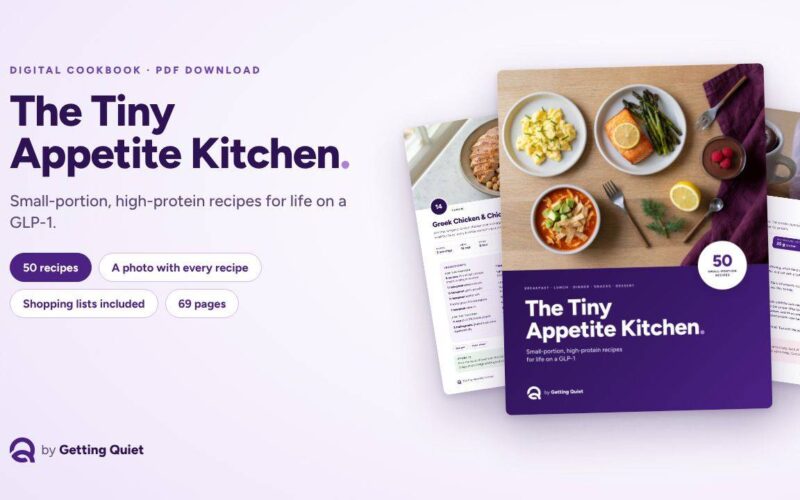
The Tiny Appetite Kitchen is here.
Fifty small-portion, high-protein recipes for the appetite you actually have. The cookbook I needed at week six is out today.
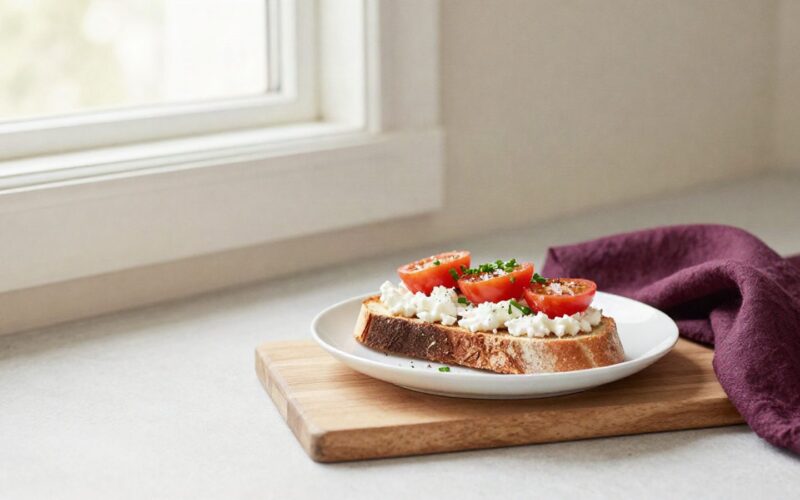
Cottage cheese toast with tomato and chives (no cooking)
One slice of good toast, a thick layer of cottage cheese, halved cherry tomatoes, chives, flaky salt. Five minutes and more protein than it looks.
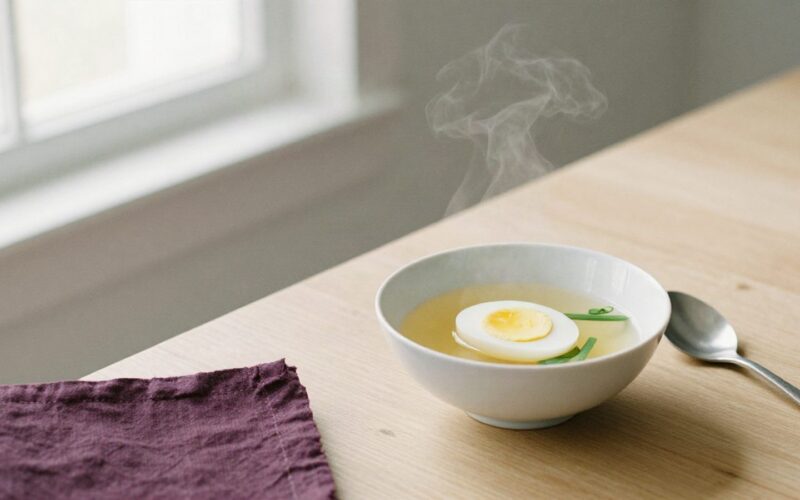
Ginger broth with a soft egg (a twelve-minute dinner)
A clear, gingery broth with a soft egg on top. Twelve minutes, one small pot, and it counts as dinner on a week when nothing else does.