Dear You,
It was 3:15 on a Wednesday and I had just been short with someone who didn’t deserve it. Not rude. Just clipped, the way you get when a meeting runs long. I apologized, went back to my desk, and sat there feeling flat, like a photocopy of myself. Then I noticed I had a headache. Then I noticed I hadn’t eaten since a hard-boiled egg at 7:40.
Hunger hadn’t announced itself. It had just quietly rearranged my afternoon and let me take the blame.
That was the first time I understood what the quiet appetite actually costs. Not food. Signal. For most of my life, hunger was a loud, reliable alarm that went off whether I wanted it to or not. Now it’s a notification on silent, and I have to check the phone.
I want to be careful here. This isn’t a post about how much to eat, and nobody should take meal advice from a blog. If you’re consistently not hungry, or you’re losing your appetite in a way that worries you, or you’re skipping meals and feeling unwell, that’s a conversation for your care team. This is one person noticing what hunger feels like when it stops shouting, and what I do so I don’t miss it.
What hunger sounds like on low volume
For me, in rough order of how often they show up:
- The 3 pm flatness. Not tired exactly. Dull. The afternoon loses its color and the task in front of me feels harder than it should.
- The headache. Low, behind the eyes, easy to blame on screens.
- The short temper. My patience for small things, a slow website, a question I’ve already answered, drops to nothing. If I’m snippy, I’m usually hungry.
- Cold hands. This one took me a year to connect.
- Suddenly remembering food exists. A craving for something specific arrives out of nowhere, usually salt, usually crunchy, after hours of not thinking about eating at all. It’s the body knocking on the only door it has left.
- A stomach that feels empty but not hungry. Hollow, with none of the urgency.
None of these say “eat.” They say “something’s off.” I had to learn to translate.
The routines I use so I don’t skip by accident
The honest truth is that I don’t rely on hunger to tell me when to eat anymore. I rely on the clock, and I let hunger tell me how much.
- Meals are appointments. Breakfast before I leave the apartment, lunch at 12:30, dinner at 7. They’re in the calendar the way a meeting would be. I don’t ask whether I’m hungry; I ask whether it’s time.
- Something is always ready. A hard-boiled egg, a cheese stick, a small container of something from the freezer. The quiet appetite will not go looking for food, so food has to be within arm’s reach, pre-decided, requiring no thought.
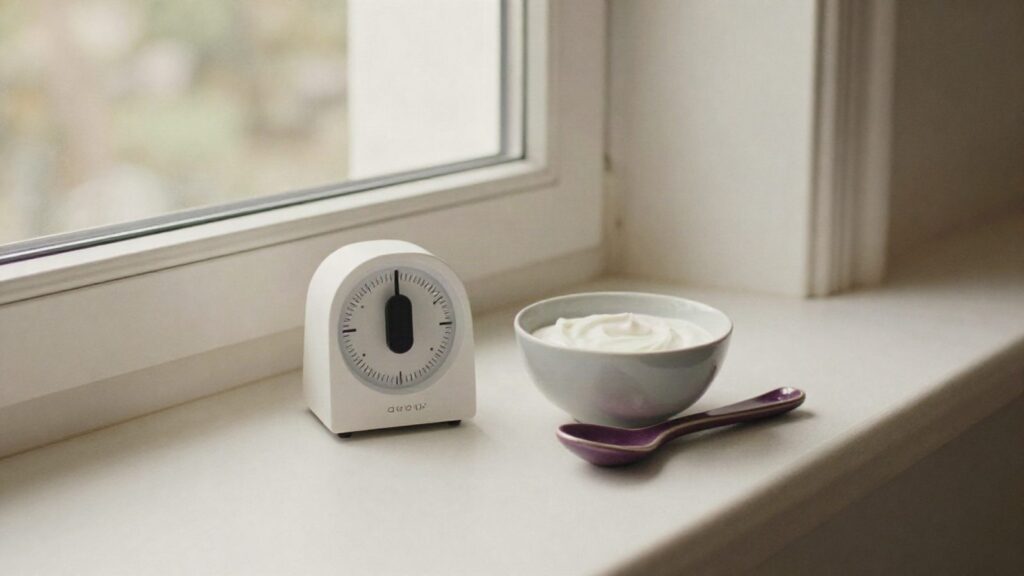
- A small bowl at the appointed time, hungry or not. I sit down with it. Some days I eat all of it and want more, and I have more. Some days I eat a third and I’m done. The point is that the question got asked. The size of the bowl means that “done after a third” isn’t a waste; it’s a Tuesday.
- The 3 pm check. I set a quiet alarm. When it goes off, I ask three things: did I eat lunch, have I had water, do I have a headache. The answers decide whether I eat something now or wait for dinner.
- I treat snippiness as data. If I notice I’m being short, before I do anything else I eat something. Then I see if I still have a problem with the slow website. I usually don’t.
What I’ve stopped doing
I’ve stopped waiting to feel hungry before eating, because on some days that wait would last until 9 pm and the headache would get there first. I’ve stopped treating a skipped meal as a win; it’s a missed signal, not a success. And I’ve stopped being annoyed at my body for not shouting. It’s not broken. It’s just using its indoor voice, and I had to learn to listen for it.
The 3:15 Wednesday still happens now and then. The difference is that I know what it is. I eat the egg, I drink the water, I apologize if I need to, and the color comes back into the afternoon by about 3:40.
Want to tell me something? Reply to any Low Volume email, or write to me here. I read everything.
Getting Quiet shares lived experience, general education, and practical tools. For medical decisions and individual treatment questions, talk with your qualified care team.
 Ayden, founder of Getting Quiet. Read the story →
More on When food goes fuzzy

My secret weapon for nausea is a toddler snack, and I’m not sorry
I’ve been lucky with nausea on a GLP-1. When it does show up, the thing that gets me through costs about a dollar and has a cartoon on it. Plus what actually helps, and when to call your care team instead.

What helped in nausea week, and what didn’t
Nine days when food was a theory and the coffee maker was my enemy. Cold things, small sips, saucers, and the phone call that mattered more than any of it.

Eating in front of other people when you’re not hungry
The office pizza, the dinner party, the mother who made your favorite. How to be at the table with a quiet appetite without turning your plate into a performance.