
The Quiet Part Same person, different fitting room
Boundaries for people with opinions about your body


Dear You,
Somewhere in the second year, I realized I had become a topic. Not a person who happened to have changed, but a conversation starter other people reached for, like the weather or the traffic. The aunt who inventories my plate. The coworker who wants to know “what you’re doing.” The gym acquaintance who has read a headline and would like to debate it with my body as the exhibit.
You don’t owe anyone the details. Not the medication, not the numbers, not the why. I learned this the slow way, by over-explaining in a break room and feeling hollowed out for the rest of the afternoon. Here are the scripts I use now. They’re plain on purpose. Plain is harder to argue with.
For “What are you doing?”
The honest answer is long and medical and mine. The short answer is also honest.
“Working with my doctor, and it’s going well. Anyway, how’s the new place?”
Notice the pivot. The pivot is doing half the work. People will take an off-ramp if you build one.
If they push: “I keep the details between me and my doctor. But thank you for noticing I’m doing well.” That second sentence matters. It thanks them for the kind part of their curiosity and closes the door on the rest.
For the medication question
“Are you on one of those shots?” is the one that lands at parties, usually with a lowered voice, as though we’re discussing contraband.
You can say yes. You can say no. You can also say: “I don’t talk about my prescriptions at dinner, but I’m happy to talk about literally anything else.” Say it lightly. You’re not offended, you’re just not available for that topic.
If someone has opinions about the medication itself, the shortcuts, the cheating, the whatever: “I’m comfortable with the choices I’ve made with my care team.” Then stop talking. The silence after that sentence is not awkward. It’s a boundary doing its job.
For the person who keeps bringing it up
Some people don’t take the first off-ramp. Or the fourth. For them I have a three-step ladder, and I climb one rung at a time.
- Redirect. “I’d rather not talk about my body today. Tell me about the trip.” Said warmly, as many times as it takes to feel repetitive.
- Name it. “You’ve asked about this a few times, and I’ve noticed I don’t love it. Can we leave it?” This feels big the first time. It isn’t. It’s a sentence.
- Leave. Physically, if needed. Refill the water, help in the kitchen, take a call that doesn’t exist. You’re allowed to exit a conversation that is about you without your permission.
For the compliments that aren’t
“You look so much better” is a sentence with a fossil in it. It says the old you was worse. You don’t have to excavate it in the moment. “Thanks, I feel good,” and move along. But you also don’t have to collect it as a gift. Let it fall on the floor.
The aunt gets a gentler version, because she’s seventy-eight and loves me and shows it in portions. “I’m good, I promise. Sit down and eat your own dinner.” She laughs. It works more often than it should.
The part nobody tells you
Setting these boundaries once doesn’t finish the job. You’ll set them again at Thanksgiving, and at the reunion, and at the dentist. It gets easier not because people stop asking but because the script stops costing you anything. The first time I said “I keep that between me and my doctor,” my face went hot. The twentieth time, I said it while reaching for the bread.
You are not being rude. You are being a person with a private life, which is what you were before anyone noticed you’d changed. The noticing is theirs to manage. The details are yours to keep.

Want to tell me something? Reply to any Low Volume email, or write to me here. I read everything.
Getting Quiet shares lived experience, general education, and practical tools. For medical decisions and individual treatment questions, talk with your qualified care team.
Ayden, founder of Getting Quiet. Read the story →
More on Same person, different fitting room

Being seen, and the strange discomfort of attention
People look at me differently now, and I flinched, then felt guilty for flinching. On a nervous system running an old program, and learning to take my coat off.

The gym at a new size
Walking into a gym feeling like an impostor in two directions, the first month of lifting badly, and the trainer who fixed my elbow and never asked why.
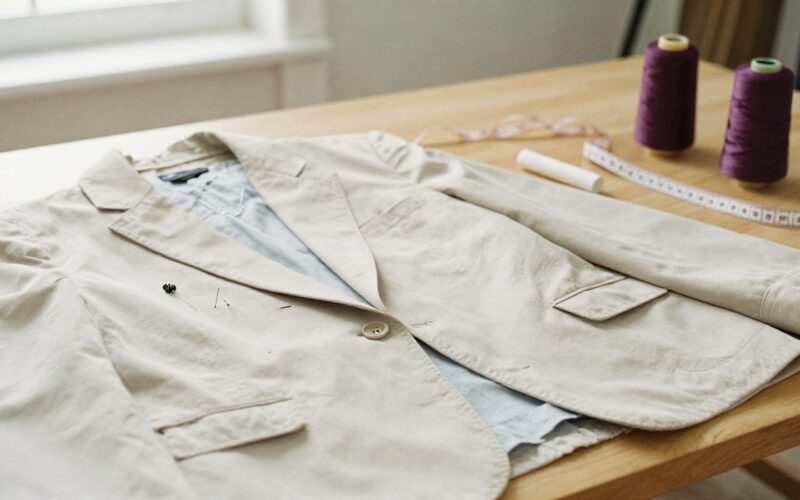
Tailoring is cheaper than a new wardrobe
What a tailor can and can't fix, what it costs, how to talk to one, which pieces are worth it, and the three garments that made it through every size.