
The Quiet Part Same person, different fitting room
Being seen, and the strange discomfort of attention

Dear You,
A woman held a door for me last spring, and I almost didn’t walk through it.
Not because of her. She was lovely, she smiled, it was a door. But I’d spent most of my adult life being the person who holds doors and is not seen walking through them, and the small courtesy landed on me like a spotlight. I said thank you in a voice I didn’t recognize and spent the next block wondering what had just happened.
Here’s what had happened. People look at me differently now. Not better, exactly. Differently. Eyes stay on me a half second longer. Strangers make small talk in line. A man at a conference asked for my opinion before I’d offered it. Servers make eye contact. None of these things are big. All of them together add up to a feeling I wasn’t prepared for, which is the feeling of being visible in a room.
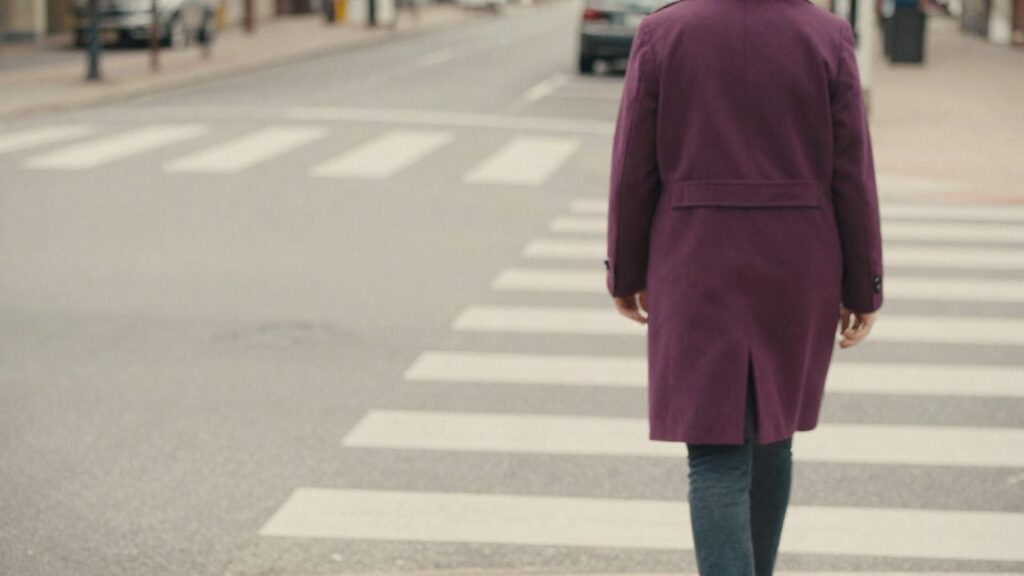
And I hated it. That’s the part I didn’t expect. I’d assumed that if the day ever came, I’d walk into attention like warm water. Instead I flinched. I kept my coat on in restaurants. I stood at the edges of rooms I used to stand at the edges of for different reasons.
Then came the guilt, which is the second layer and in some ways the worse one. Who am I to be uncomfortable with kindness? People at my old size go whole weeks without a stranger’s smile, and here I was, flinching at one. It felt ungrateful. It felt like complaining about a gift. So I didn’t tell anyone, and the not-telling made it heavier.
One person’s experience, but I’ve since heard enough versions of this from others to believe it’s common. The body changed over many months. The nervous system is on a different schedule, and it still runs the old program: be small, be unremarkable, don’t take up space you’ll be asked to justify. When the world starts handing you space, the program doesn’t know what to do with it. It reads attention as threat because, for a long time, attention mostly was.
What helped me stop flinching
I named it. Out loud, to my partner, in the car. “I don’t know how to be looked at.” He didn’t laugh. He said “I’ve noticed you hunch when people are nice to you,” and I had not known that, and it was true.
I practiced staying. When someone held a door, I walked through it at a normal speed and said thank you at a normal volume. When someone made small talk, I made it back. Tiny acts, repeated, the way you’d train any skittish animal, which is roughly what my nervous system was.
I took my coat off. In the restaurant, at the table, like a person who intends to stay. That one took a few tries.
I let the guilt be there without obeying it. The guilt wanted me to shrink back down so the discomfort would stop. I’d already done enough shrinking for one lifetime. I could carry a little guilt instead.
And I stopped treating the attention as a judgment about my body, which, I slowly realized, it mostly isn’t. People weren’t looking at me because of what had changed. Most of them never knew me before. They were looking at me because I was a person in the room, and that’s what people do with people. The old version of me got less of that for reasons that say more about the world than about him. This version gets a normal amount. Normal felt like a lot.
The quiet part
Here it is, the thing under the thing: I think I was afraid that if I got comfortable being seen, I’d lose track of the person who wasn’t. Who spent years at the edges. Who deserved the door held for him too and mostly didn’t get it.
I haven’t lost him. I take him with me into every room. He’s the reason I hold the door for the next person, and look at them when they walk through, and make sure they know they were seen. Taking up space, it turns out, isn’t about me. It’s about what I do with it.

Want to tell me something? Reply to any Low Volume email, or write to me here. I read everything.
Getting Quiet shares lived experience, general education, and practical tools. For medical decisions and individual treatment questions, talk with your qualified care team.
Ayden, founder of Getting Quiet. Read the story →
More on Same person, different fitting room
The gym at a new size
Walking into a gym feeling like an impostor in two directions, the first month of lifting badly, and the trainer who fixed my elbow and never asked why.
Tailoring is cheaper than a new wardrobe
What a tailor can and can't fix, what it costs, how to talk to one, which pieces are worth it, and the three garments that made it through every size.

The same person in a smaller chair
Being treated differently, the discomfort of being seen, and the parts that didn't change at all. Not a transformation story. A continuity story.